

What You Should Know About Lithium-Ion Battery Risks
Brought to you by WBC Risk Partners
August 6, 2025
Lithium-ion batteries power many of the tools and devices we use every day—phones, laptops, e-bikes, power tools, and more. These small but powerful batteries are efficient, lightweight, and rechargeable, which is why they’re found in so many households and businesses.
But with convenience comes risk.
When lithium-ion batteries are damaged, misused, or poorly manufactured, they can pose a serious fire hazard. At WBC Risk Partners, we want to make sure you’re aware of the risks these batteries carry—and how to minimize them.
Are Americans Aware of the Risk?
Recent survey data shows a gap in public awareness:
-
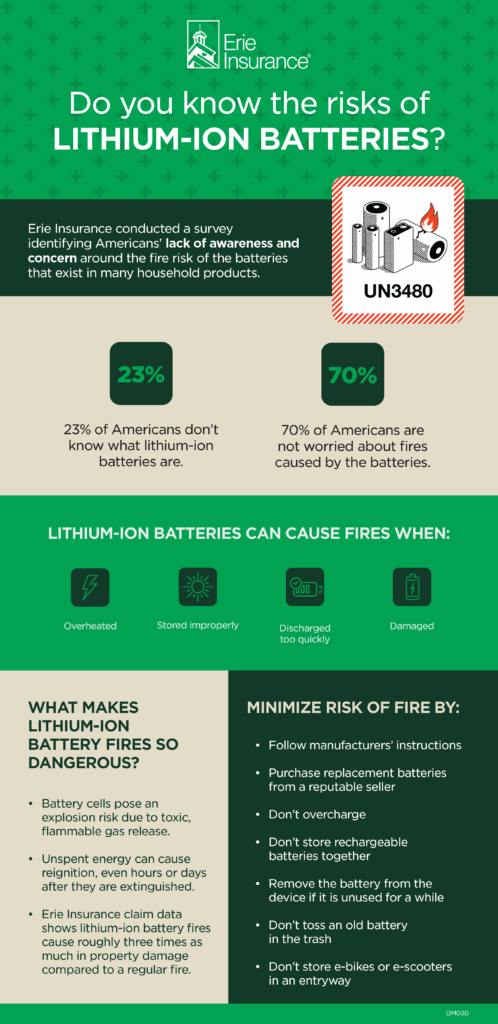
23% of Americans aren’t familiar with what lithium-ion batteries are.
-
70% of Americans say they’re not concerned about the fire risks they pose.
That’s a problem, especially considering the unique dangers associated with these types of fires.
When Do Lithium-Ion Batteries Become Dangerous?
These batteries are more likely to catch fire when they’re:
-
Overheated (such as when left in direct sunlight or overcharged)
-
Stored in unsafe conditions (like near flammable items)
-
Discharged too quickly
-
Damaged by drops, punctures, or manufacturing defects
Why Lithium-Ion Fires Are Different
A fire involving lithium-ion batteries is more intense and more complex than a standard fire:
-
The battery cells can explode, releasing toxic, flammable gas.
-
Even after a fire is put out, reignition is possible—sometimes hours or days later.
-
According to insurance claim data, lithium-ion fires cause three times more property damage than typical residential fires.
Fire Prevention Tips
If you use or store devices powered by lithium-ion batteries, here are some safety tips to keep in mind:
-
Always follow the manufacturer’s instructions.
-
Purchase replacement batteries only from trusted retailers.
-
Never overcharge or leave devices charging unattended for long periods.
-
Don’t store multiple loose batteries together—they can short-circuit.
-
Remove batteries from devices that are not in use.
-
Dispose of old batteries properly—not in the trash.
-
Avoid storing e-bikes or e-scooters near entryways, exits, or main living areas.
At WBC Risk Partners, we work hard to help our clients protect their homes, businesses, and livelihoods from preventable risks—like those associated with lithium-ion batteries. If you have questions about how your insurance coverage would respond to a battery-related fire, we’re always here to help.
Stay safe and stay informed.

